
Casino Royale Ball 2026

FUNDRAISING – 28 Jul 2026 We still have a few tables available for our annual ball on Friday 2nd October at the Park Hyatt London River Thames. Get in touch if you would like to join us!
Meet Susan
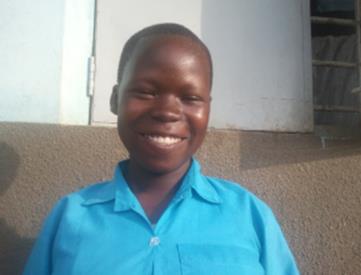
Meet Susan Meet Susan Piloya, a 14 year old student in Class P6 at Koch Goma Primary School – one of the most highly populated schools in the region, with over 1,000 pupils. Water, sanitation and hygiene (WASH) is recognised as a crucial component affecting the quality of girls’ education in developing countries like Zambia. Without access to facilities like hygienic latrines and changing rooms, girls are at serious risk of illness, dropping out of school and sexual abuse. This puts them at a significant disadvantage to their male counterparts, hindering boys’ and girls’ equitable access to education. If girls are to be encouraged to stay in school they need clean, private facilities in which to feel safe and secure. Too often in countries like Uganda there is either a complete lack of such facilities in schools, or girls are forced to use changing rooms and washrooms which are dirty or have no doors, leaving them exposed and potentially unsafe. Thanks to large programmes in the mid-90s like UNICEF’s Water, Education and Sanitation programme, which ran from 1995 – 2000, there has been an increase in the prevalence of such facilities for girls, but there is still a long way to go. Girls’ access to changing rooms and washrooms is of particular importance during menstruation; it is all too common for girls to feel they have to skip school in order to manage their periods. Without clean and private changing rooms and washrooms they have nowhere to change dirty pads and manage their personal hygiene. Providing girls’ changing rooms and washrooms enables them to manage their menstruation with dignity, encouraging them to stay in school throughout their periods, and ultimately to stay in school full stop. After attending one of our workshops for girls, Susan told us: “Before the girls’ workshop, I would always feel uncomfortable going to the toilet to change my pads. Now I know it is normal and I’m healthy. I learnt how to take care of myself during menstruation and this has allowed me to stay freely in school throughout my period”. Because many pupils lack the opportunity to become more aware of changes in their bodies when they grow up, girls often become the target of bullying and ridicule from boys at school. We have found that, unfortunately, many girls suffer these experiences in silence and are put off going to school as a result.With greater information, we hope to change this outlook for many girls in the region. Since the start of the project, we have found strong support, both from teachers and from the local community, for girls’ education. This support has been so strong that the school community itself came up with the idea of forming after-school clusters. This allows a senior mother figure to mentor and support girls experiencing challenges, and is proving to be an effective way of encouraging girls to stay in school. We are looking to build on the success of this programme both in northern Uganda and with the community schools we work with in Kalomo District, Zambia. Set up a monthly donation Learn more about our Girls' Education Programme
Meet Sajida
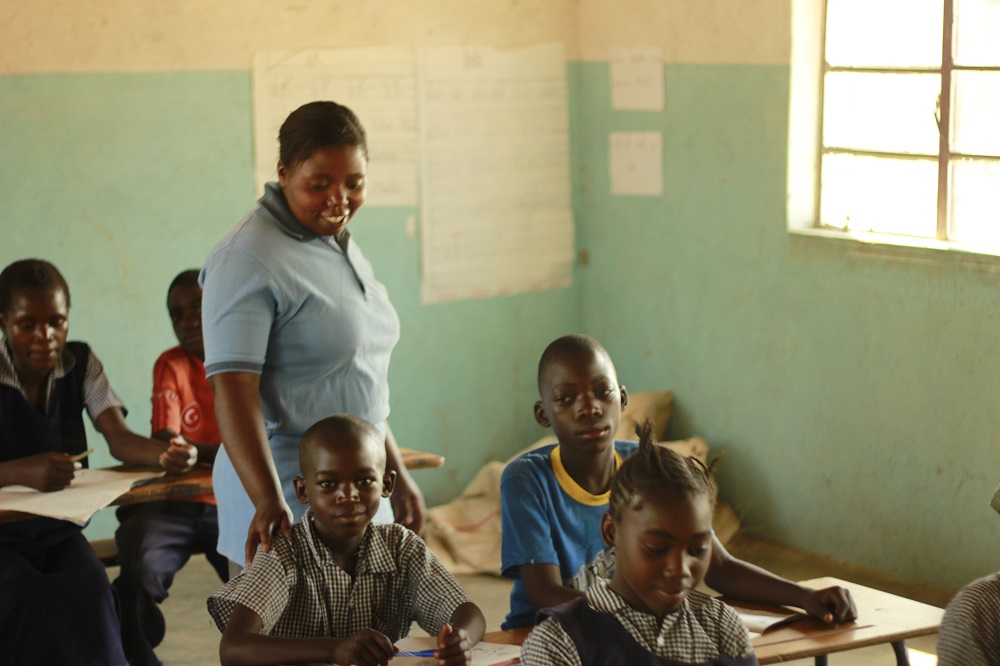
Meet Sajida In Zambia we work in the Kalomo District of the Southern Province, where we have developed a strong and dynamic relationship with the Kalomo District Education Board and over 25 schools. We are now the only organisation supporting the Kalomo District Education Board to strengthen the quality of primary education in the region, since a number of large international NGOs have ended programmes. Despite the reduction in NGO support Kalomo remains one of the most impoverished in the Southern Province with some of the lowest examination results in the country according to Government statistics. In 2011 the district was placed ranked last in the National examination league, and literacy rates stand at around 30%. With the District Education Board we identified lack of trained teachers as a main contributing factor to this poor performance. Many community teachers are working without training, and often without pay. To address this problem, for the last year we have been working with Charles Lwenga Teaching College to support 20 community school teachers from Kalomo to study towards a Diploma in Education. Learning out of term time over the course of three years, these teachers will eventually become government-accredited teachers, and much better equipped to teach the curriculum. By investing in teacher training we aim to boost quality standards and improve educational outcomes for children in the district. Sajida is one of the twenty young teachers enrolled on the teacher training programme. It’s very quiet in Sajida’s classroom when we visit as the children take their end of term Maths test. Sajida says of her training, “I’m enjoying. What we’ve learnt is how to manage a class. To understand the behaviour of the children. I have to understand the behaviours of each different child. And it helps me see that, this one learns this way, she can understand.” “My ambition for the future is to go up a grade, getting more knowledge of education and becoming a better teacher.” With your help, teachers like Sajida are receiving the training they need to provide the quality education that will give children a brighter future. Set up a monthly donation
Meet Flavia
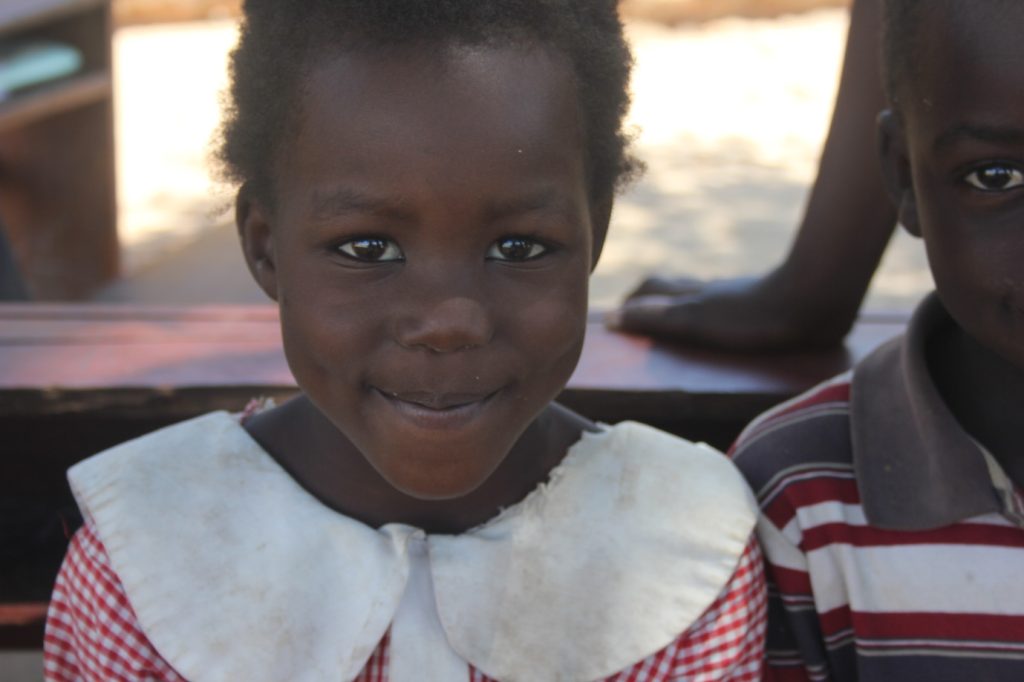
Meet Flavia Since 2005, we have worked with over 300 primary and nursery schools in Uganda, South Sudan and (until recently) Zambia, to allow over 120,000 children to fulfil their potential. We don’t just provide infrastructure; we empower whole communities – pupils, teachers, and parents – to transform schools into thriving learning environments that build brighter, better futures. We start where the need is greatest, and the community is committed. Working with local education authorities, school leaders, and parents, we deliver support that is community-led, sustainable, and tailored to local needs. Our in-country staff allow us to build long-standing relationships and respond quickly and effectively to challenges. We end our support once we’ve strengthened the quality of education and helped the school thrive independently. Set up a monthly donation Learn more about our Jumpstart Project here